
What is Ayurveda? A Complete Beginner’s Guide
Category: Ayurveda
Author: SRSDM Ayurveda
Reading Time: 6–8 Minutes
What is Ayurveda?
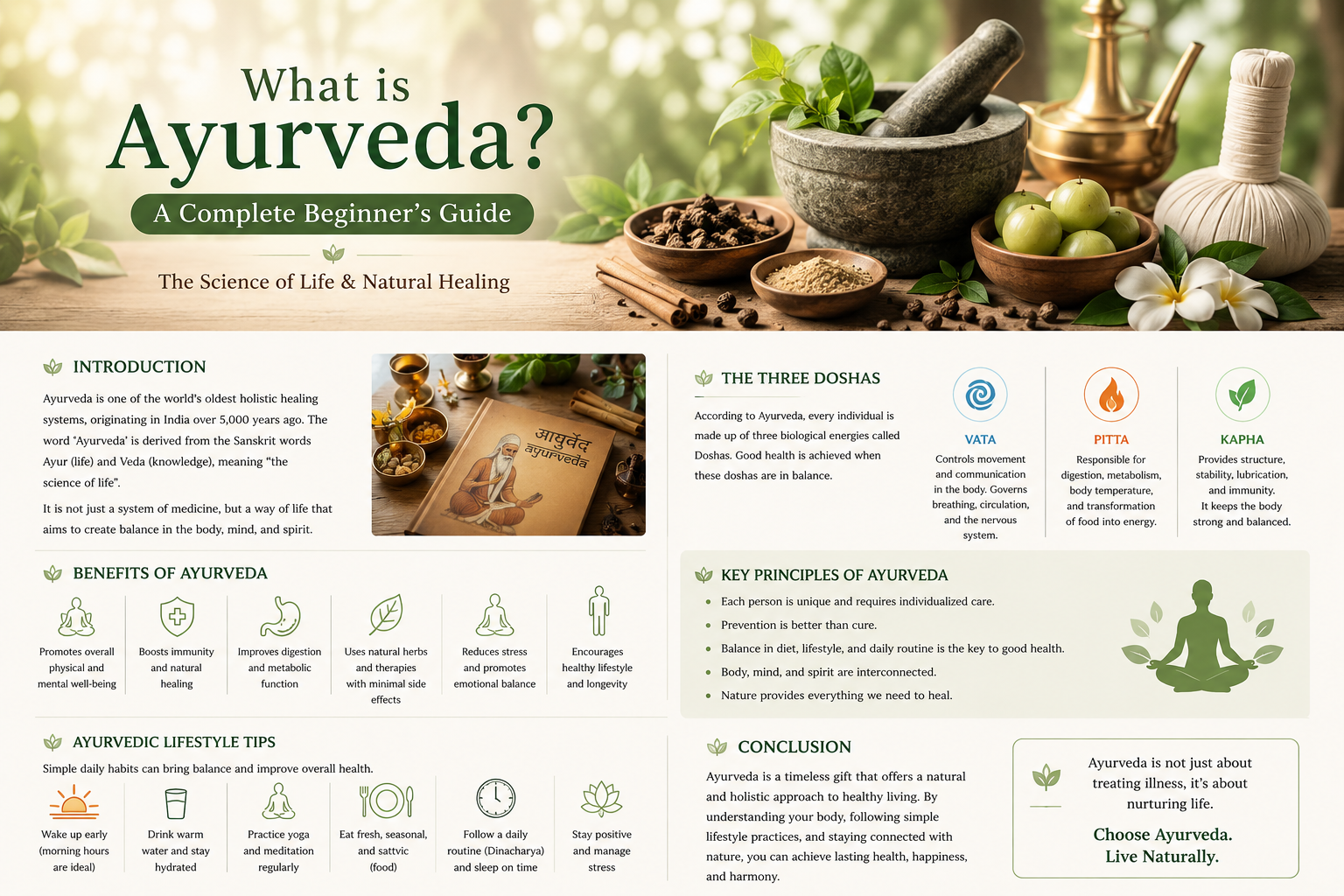
Ayurveda is one of the world’s oldest holistic healing systems, originating in India more than 5,000 years ago. The word “Ayurveda” comes from two Sanskrit words: “Ayur”, meaning life, and “Veda”, meaning knowledge or science. Together, Ayurveda means “The Science of Life.”
Unlike modern medicine, which often focuses on treating diseases after they appear, Ayurveda emphasizes maintaining balance in the body, mind, and spirit to prevent illness before it begins. It encourages healthy daily habits, proper nutrition, herbal remedies, and a balanced lifestyle to achieve long-term wellness.
The Philosophy of Ayurveda
According to Ayurveda, every individual is unique. Your body, mind, emotions, digestion, and immunity all work differently. Instead of following a one-size-fits-all approach, Ayurveda provides personalized recommendations based on your body’s natural constitution, known as Prakriti.
The main goal of Ayurveda is to create harmony between the body, mind, and environment.
The Three Doshas
Ayurveda believes that our body is governed by three biological energies known as Doshas.
🌿 Vata Dosha
Vata is made up of the Air and Space elements. It controls movement in the body, breathing, blood circulation, nerve functions, and creativity.
When balanced:
- Good energy levels
- Creative thinking
- Healthy digestion
- Better flexibility
When imbalanced:
- Anxiety
- Dry skin
- Constipation
- Insomnia
🔥 Pitta Dosha
Pitta is formed by Fire and Water elements. It controls digestion, metabolism, body temperature, intelligence, and hormones.
When balanced:
- Strong digestion
- Healthy skin
- Good concentration
- Confidence
When imbalanced:
- Acidity
- Skin rashes
- Irritability
- Excessive body heat
🌱 Kapha Dosha
Kapha consists of Earth and Water elements. It provides strength, stability, lubrication, immunity, and emotional calmness.
When balanced:
- Strong immunity
- Healthy joints
- Emotional stability
- Good stamina
When imbalanced:
- Weight gain
- Sluggish digestion
- Excess mucus
- Low energy
Benefits of Ayurveda
Ayurveda offers a holistic approach to health rather than simply treating symptoms.
Some major benefits include:
- Improves digestion naturally
- Strengthens the immune system
- Reduces stress and anxiety
- Promotes better sleep
- Detoxifies the body
- Improves skin and hair health
- Supports heart and liver health
- Helps manage lifestyle disorders
- Increases overall energy levels
- Encourages healthy ageing
Ayurvedic Lifestyle Principles
Ayurveda encourages simple daily habits that support long-term health.
These include:
- Wake up early (Brahma Muhurta)
- Drink warm water in the morning
- Practice Yoga and Pranayama
- Eat freshly cooked seasonal food
- Follow regular meal timings
- Sleep on time
- Stay physically active
- Manage stress through meditation
- Spend time in nature
- Maintain a positive mindset
Ayurveda and Diet
Food is considered one of the strongest medicines in Ayurveda.
A healthy Ayurvedic diet focuses on:
- Fresh fruits and vegetables
- Seasonal ingredients
- Whole grains
- Herbal spices like turmeric, cumin, coriander, and ginger
- Warm, freshly prepared meals
- Adequate hydration
Processed foods, excessive sugar, and unhealthy oils are generally minimized to support overall well-being.
Common Ayurvedic Therapies
Ayurveda offers several traditional therapies designed to support overall wellness, including:
- Panchakarma Detox Therapy
- Abhyanga (Herbal Oil Massage)
- Shirodhara
- Nasya Therapy
- Swedana (Herbal Steam Therapy)
- Herbal Medicines
- Diet & Lifestyle Counselling
These therapies are selected based on an individual’s health condition and body constitution.
Is Ayurveda Safe?
Ayurveda can be a beneficial part of a healthy lifestyle when practiced under the guidance of a qualified Ayurvedic physician. Self-medicating with herbs or therapies is not recommended, especially if you have an existing medical condition, are pregnant, or are taking prescription medications. Always seek professional advice before starting any treatment.
Conclusion
Ayurveda is not just a medical system—it is a complete way of living that promotes balance, prevention, and natural healing. By understanding your body type, following healthy daily routines, eating nourishing foods, and adopting positive lifestyle habits, you can improve your overall quality of life.
Whether your goal is better digestion, stronger immunity, stress management, or long-term wellness, Ayurveda offers a time-tested and holistic path toward healthier living.
🌿 Why Choose SRSDM Ayurveda?
At SRSDM Ayurveda, we combine authentic Ayurvedic wisdom with personalized care to help every patient achieve natural healing. Our experienced Ayurvedic experts focus on identifying the root cause of health concerns and providing individualized treatment plans through herbal medicine, Panchakarma therapies, diet guidance, and lifestyle recommendations.