The Ultimate Ayurvedic Detox & Rejuvenation Therapy
Panchakarma (पंचकर्म) is the most important purification and rejuvenation therapy described in Ayurveda. The word Panchakarma means “Five Therapeutic Procedures.” These procedures eliminate accumulated toxins (Ama), balance the three Doshas (Vata, Pitta, Kapha), restore digestive fire (Agni), and rejuvenate the body, mind, and senses.
Unlike temporary detox programs, Panchakarma aims to remove the root cause of disease rather than merely suppressing symptoms.
Sanskrit Reference
दोषाः कदाचित् कुप्यन्ति, जिताः लङ्घनपाचनैः।
ये तु संशोधनैः शुद्धाः, न तेषां पुनरुद्भवः॥
Meaning: Doshas controlled only by fasting or medicines may return, but those eliminated through purification therapies do not recur easily.
Reference: Charaka Samhita, Sutra Sthana
Removes accumulated toxins (Ama)
Balances Vata, Pitta & Kapha
Improves digestion and metabolism
Enhances immunity (Vyadhikshamatva)
Relieves chronic pain and inflammation
Improves skin health and complexion
Promotes healthy weight management
Reduces stress, anxiety and mental fatigue
Improves sleep quality
Supports hormonal balance
Delays premature ageing (Rasayana effect)
Enhances energy and vitality
Improves circulation and joint flexibility
Helps prevent recurrence of chronic diseases
Promotes overall physical and mental well-being
Vamana (Therapeutic Emesis)
|कफे विदध्याद्वमनम्।
Reference: Charaka Saṁhitā, Sūtrasthāna 20
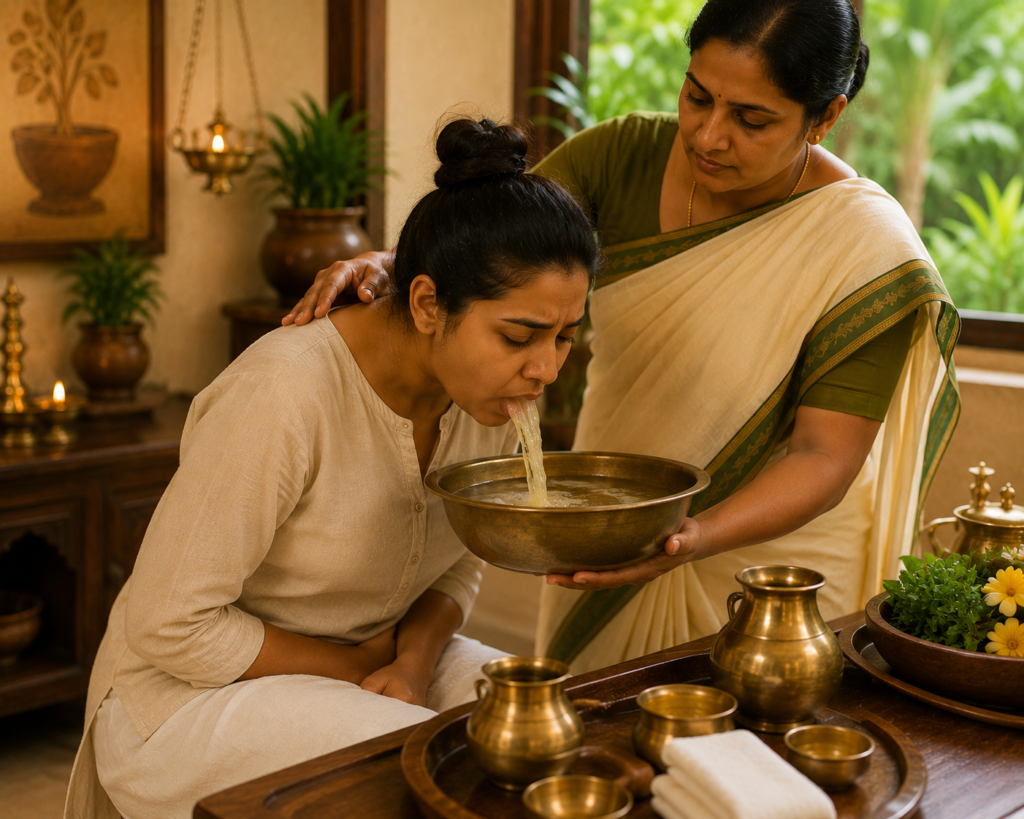
Vamana is a therapeutic emesis procedure indicated for aggravated Kapha Dosha and selected Kapha disorders.
वमन कफ दोष के शोधन की प्रमुख पंचकर्म चिकित्सा है।
Purpose: Eliminates aggravated Kapha Dosha through controlled vomiting.
Virechana (Therapeutic Purgation)
| पित्ते विरेचनं श्रेष्ठम्।
Reference: Charaka Saṁhitā, Sūtrasthāna 20
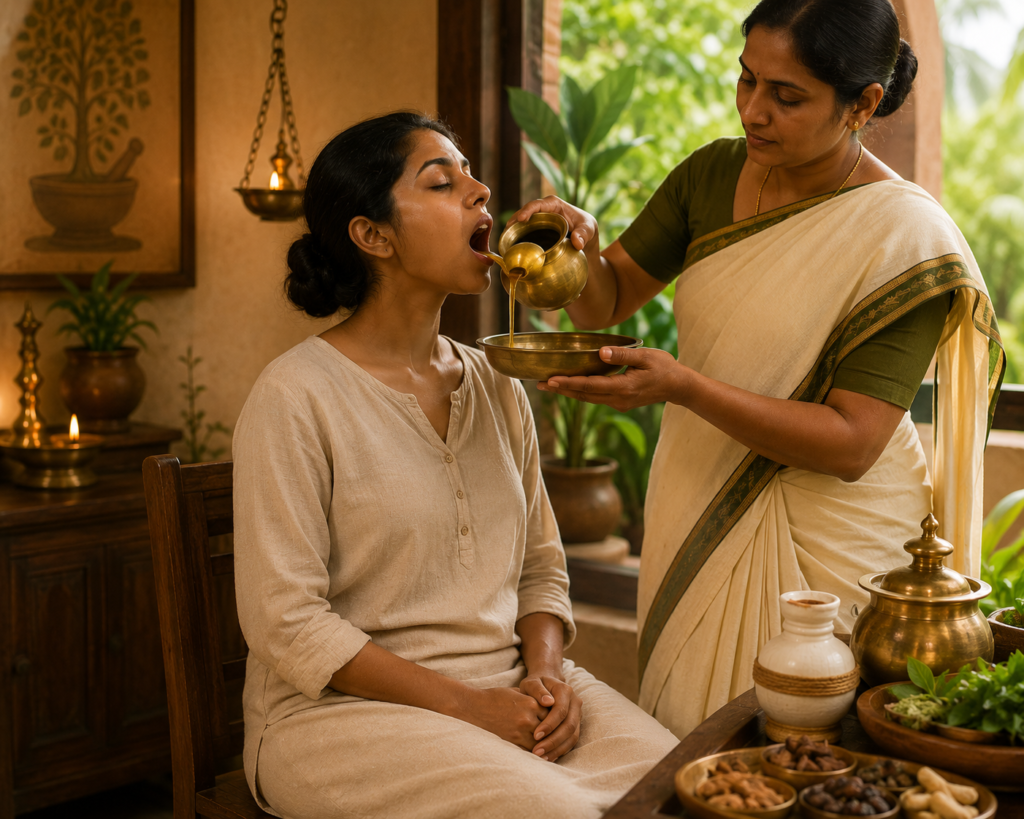
Virechana is a therapeutic purgation procedure used to eliminate aggravated Pitta Dosha.
विरेचन पित्त दोष के शोधन की प्रमुख चिकित्सा है।
Purpose: Eliminates aggravated Kapha Dosha through controlled vomiting.
Common Indications:-
Hyperacidity, Liver disorders, Skin diseases, Psoriasis, Migraine, Constipation, Jaundice
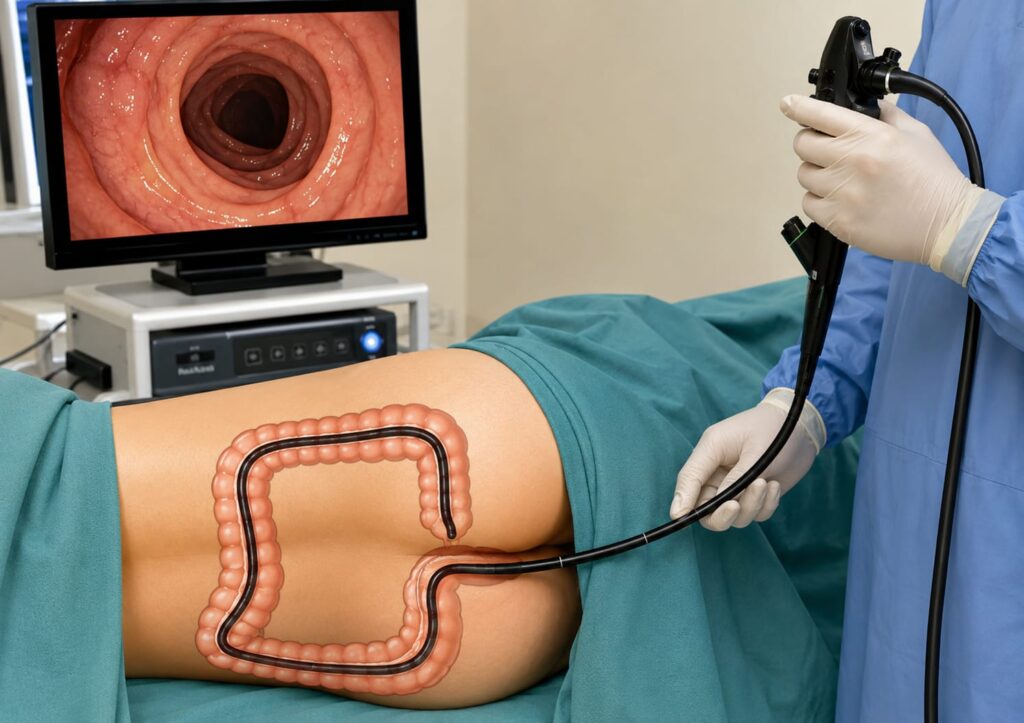
Basti (Medicated Enema)
|बस्तिर्वातहराणां श्रेष्ठः।
Reference: Charaka Saṁhitā, Siddhi Sthāna
Basti is considered the supreme therapy for Vata disorders and one of the five principal Panchakarma procedures.
बस्ति पंचकर्म की प्रमुख चिकित्सा है तथा वात दोष की सर्वोत्तम चिकित्सा मानी गई है।
Considered the King of Panchakarma for Vata disorders.
Types: Niruha (Asthapana) Basti, Anuvasana Basti, Matra Basti, Yapana Basti
Common Indications:-
Arthritis, Sciatica, Back pain, Cervical spondylosis, Paralysis, Neurological disorders, nfertility, Constipation
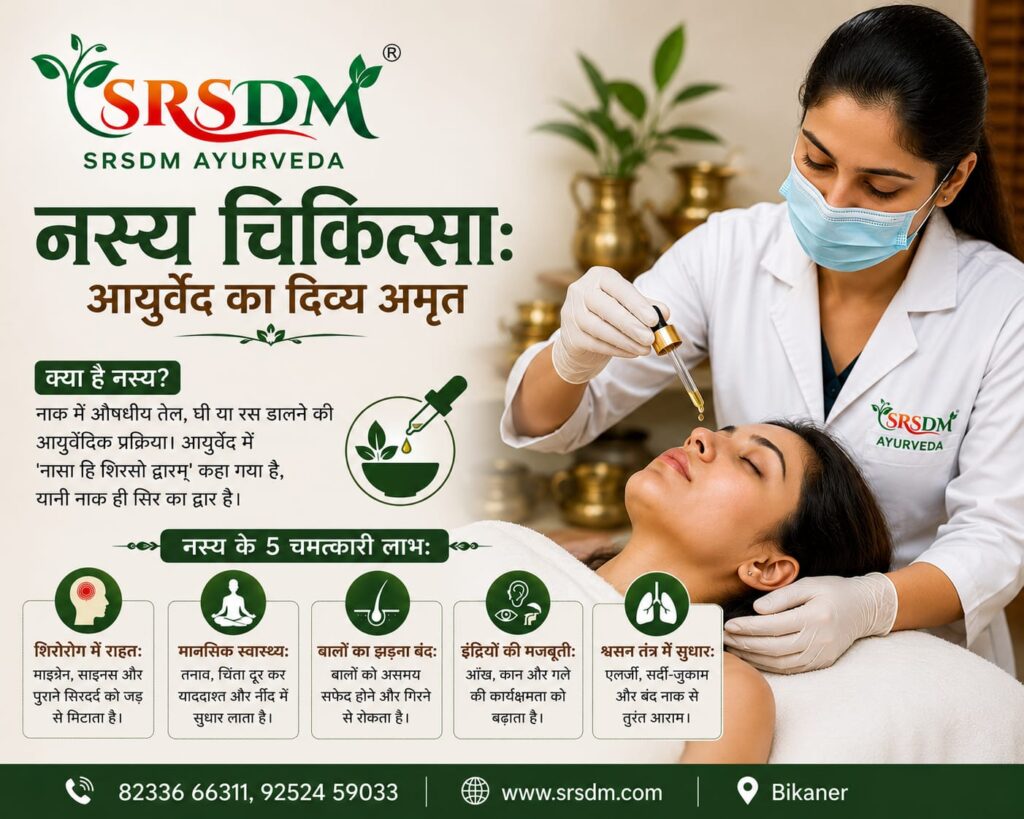
Nasya (Nasal Therapy)
|नासा हि शिरसो द्वारम्।
Reference: Charaka Saṁhitā, Siddhi Sthāna 9
Nasya is the administration of medicated oils or herbal medicines through the nostrils. Since the nose is regarded as the gateway to the head, it is beneficial for disorders above the clavicle.
नस्य में औषधियों को नासिका मार्ग से दिया जाता है। आयुर्वेद के अनुसार नासिका शिर का द्वार है, इसलिए यह ऊर्ध्वजत्रुगत रोगों में उपयोगी है।
Administration of medicated oil, ghee, or herbal preparations through the nostrils.
Common Indications:- Sinusitis, Migraine, Cervical stiffness, Allergic rhinitis, Hair fall, Facial paralysis, Headache
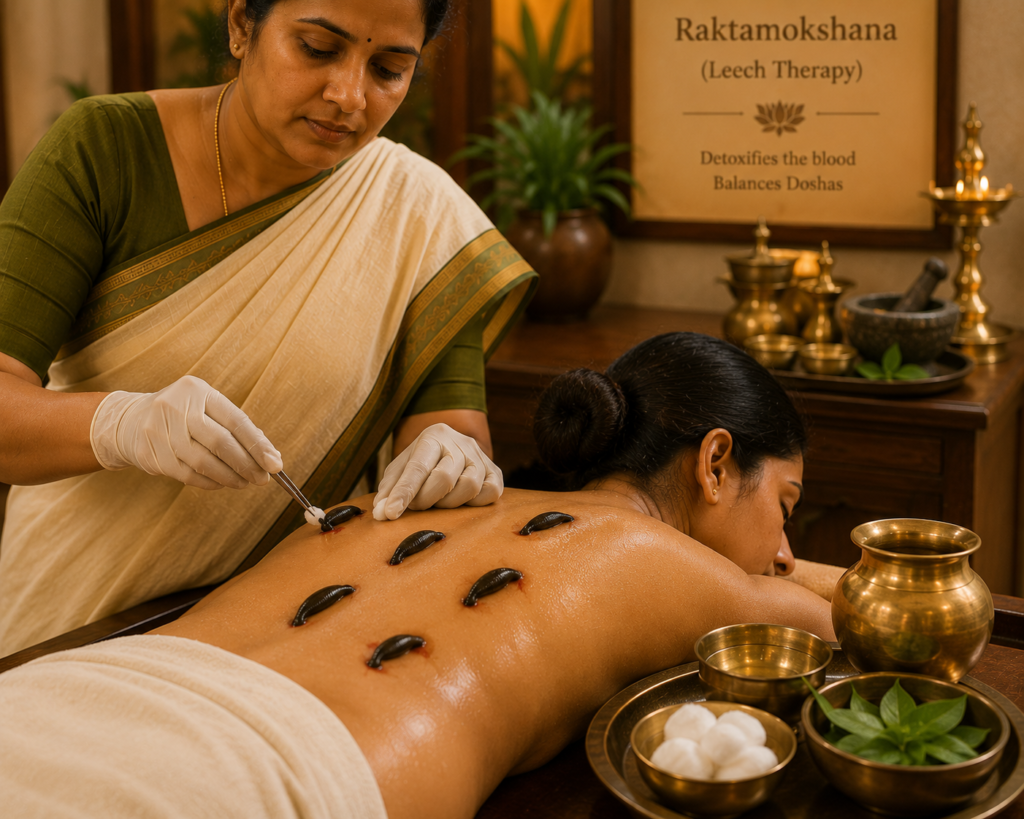
Raktamokshana (Bloodletting Therapy)
|रक्तमोक्षणमर्धं चिकित्सायाः।
Reference: Suśruta Saṁhitā
Raktamokshana is a classical Ayurvedic blood purification therapy indicated in selected disorders caused by vitiated blood.
रक्तमोक्षण दूषित रक्त के शोधन की आयुर्वेदिक चिकित्सा है।
Purification of vitiated blood using classical Ayurvedic methods.
Methods:Siravyadha, Jalaukavacharana (Leech Therapy), Alabu, Shringa, Prachchhana
Common Indications:-Skin diseases, Local inflammation, Varicose veins,Non-healing wounds, Gout, Certain Pitta-Rakta disorders
Common Indications of Panchakarma
Panchakarma may be recommended in appropriately selected patients for:
✔️ Arthritis ✔️ Cervical & lumbar spondylosis ✔️ Sciatica ✔️ Paralysis ✔️ Migraine ✔️ Sinusitis ✔️ Allergic disorders ✔️ Asthma ✔️ Chronic constipation ✔️ Irritable bowel disorders ✔️ Obesity ✔️ Diabetes (as supportive care) ✔️ Psoriasis ✔️ Eczema ✔️ Acne ✔️ Hair fall ✔️ Stress and anxiety ✔️ Sleep disorders ✔️ Infertility (selected cases) ✔️ Lifestyle disorders
Note: Panchakarma should always be performed after proper Ayurvedic assessment
(Prakriti, Vikriti, Agni, Bala, and disease stage) under the supervision of a qualified Ayurvedic physician.
(FAQ)
What is Panchakarma?
Panchakarma is Ayurveda’s classical detoxification and rejuvenation therapy consisting of five purification procedures to eliminate accumulated Doshas and toxins.
Is Panchakarma only for sick people?
No. It is beneficial for both healthy individuals (to maintain wellness and prevent disease) and patients with chronic illnesses, when appropriately indicated.
How long does Panchakarma treatment take?
Depending on the condition and treatment plan, it may last from 7 to 28 days, including preparatory procedures (Purva Karma), the main therapy (Pradhana Karma), and post-therapy care (Paschat Karma).
Is Panchakarma painful?
Most procedures are comfortable. Some therapies may cause temporary discomfort, but they are performed under expert supervision with careful monitoring.
Can everyone undergo Panchakarma?
No. It is not suitable for everyone. Children, frail elderly individuals, pregnant women, and people with certain acute or severe medical conditions may require modified therapies or may not be suitable candidates.
Is a special diet required?
Yes. A physician usually prescribes a light, easily digestible diet before, during, and after Panchakarma to support the cleansing process and recovery.
How often should Panchakarma be done?
For healthy individuals, it is commonly advised once or twice a year, especially during seasonal transitions (Ritucharya). The frequency for patients depends on their disease and clinical assessment.
8. What precautions should be taken after Panchakarma?
Follow the prescribed diet (Samsarjana Krama), avoid strenuous exercise, maintain adequate rest, and adhere to the physician’s instructions for optimal results.
Classical Ayurvedic Reference
|शोधनं शमनं चैव द्विविधं चिकित्सितम्।
Meaning: Ayurveda broadly classifies treatment into two categories—Shodhana (purification) and Shamana (pacification). Panchakarma is the principal form of Shodhana Chikitsa.
Reference: Charaka Samhita, Sutra Sthana
“Panchakarma is not merely a detox therapy—it is a comprehensive Ayurvedic purification and rejuvenation process that restores the balance of Doshas, strengthens Agni, enhances immunity, and promotes long-term health when performed under the guidance of a qualified Ayurvedic physician.”
a Personalized Approach
At SRSDM Ayurveda, we believe true wellness begins with understanding your body and restoring its natural balance. With personalized Ayurvedic guidance and traditional healing wisdom, take the first step towards a healthier and more balanced life.